
Access to reliable lighting infrastructure is essential for ensuring public safety,
enhancing mobility, promoting social activities, and improving the quality of life in
rural communities. Recognizing this need, the Airports Authority of India (AAI), under
its Corporate Social Responsibility (CSR) initiative, supported the implementation of
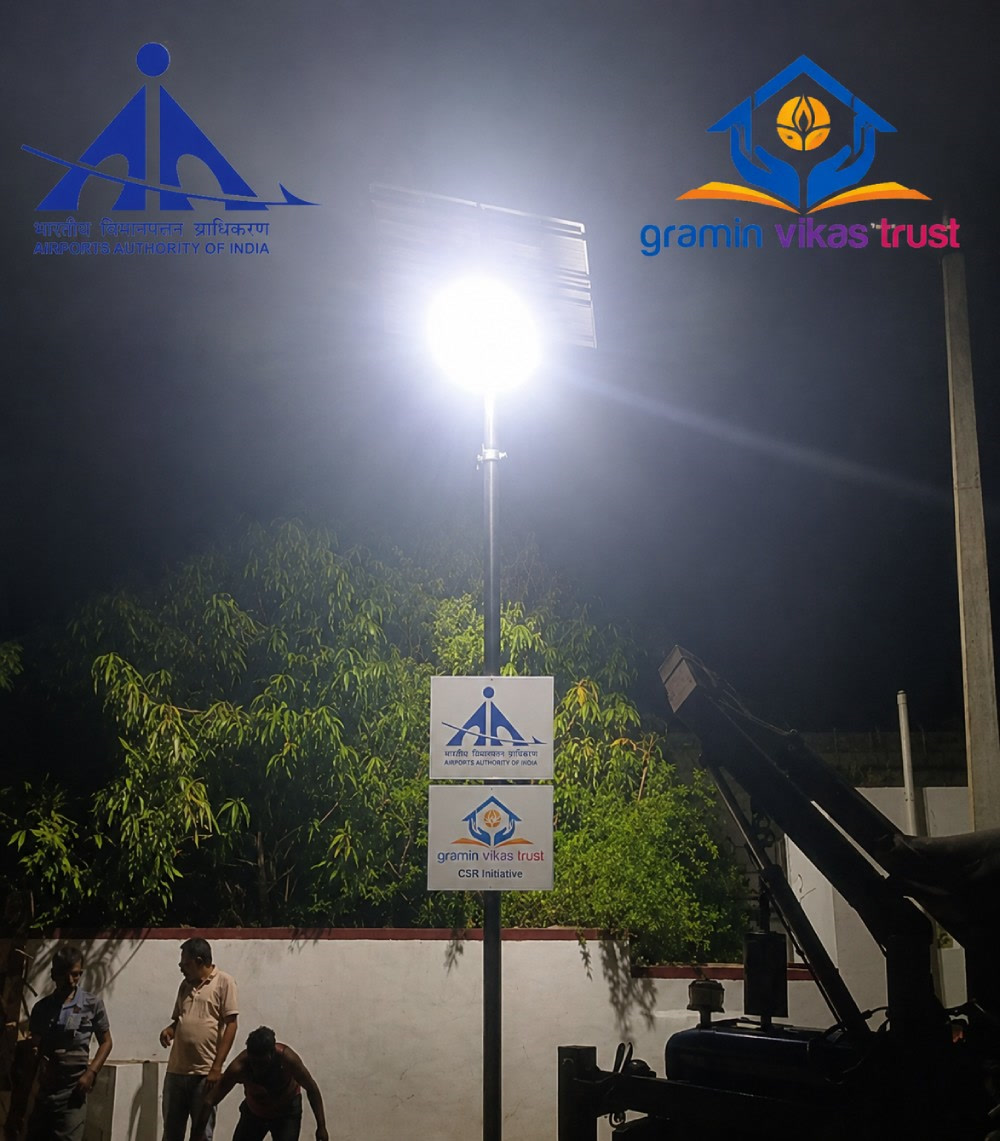
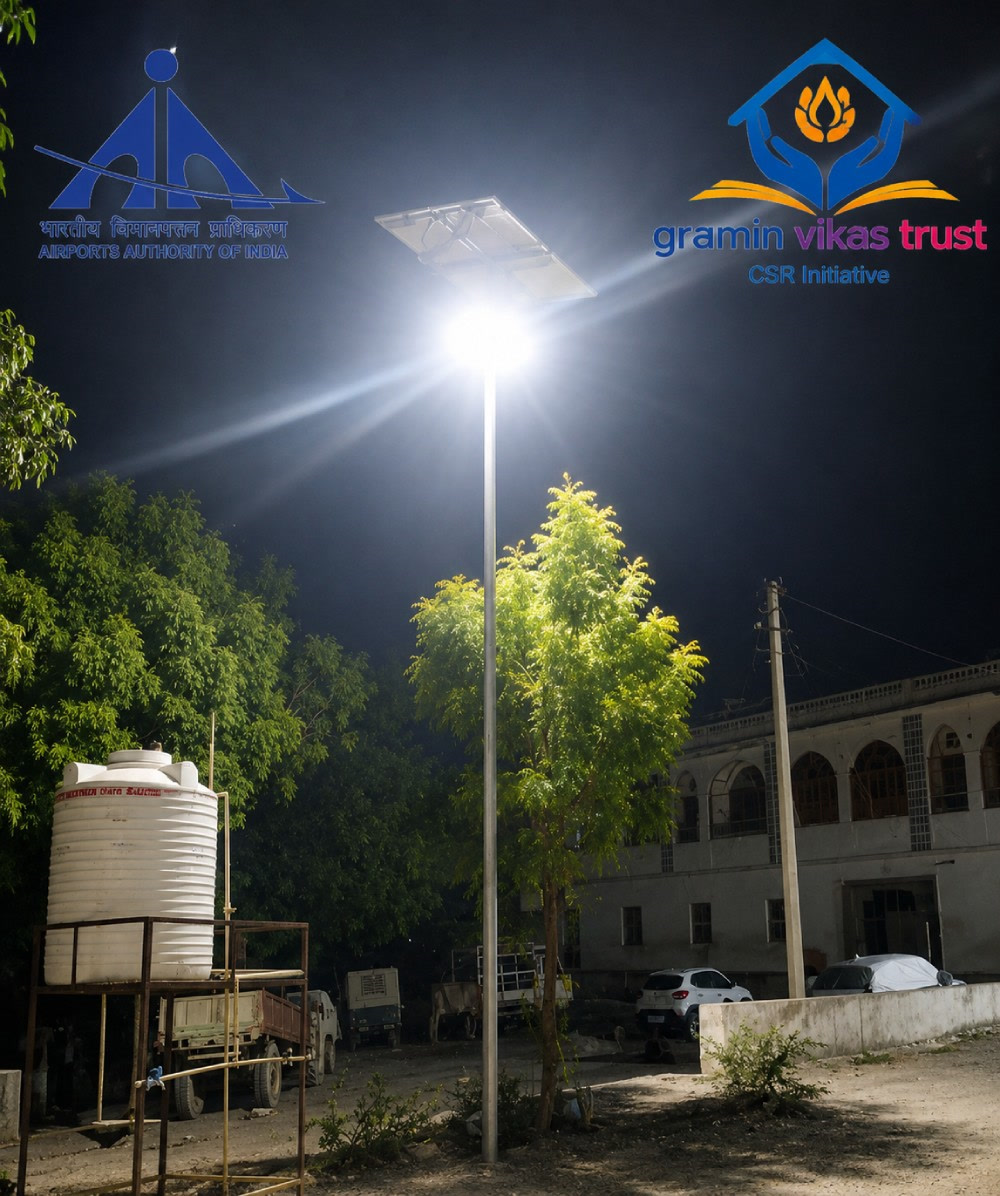
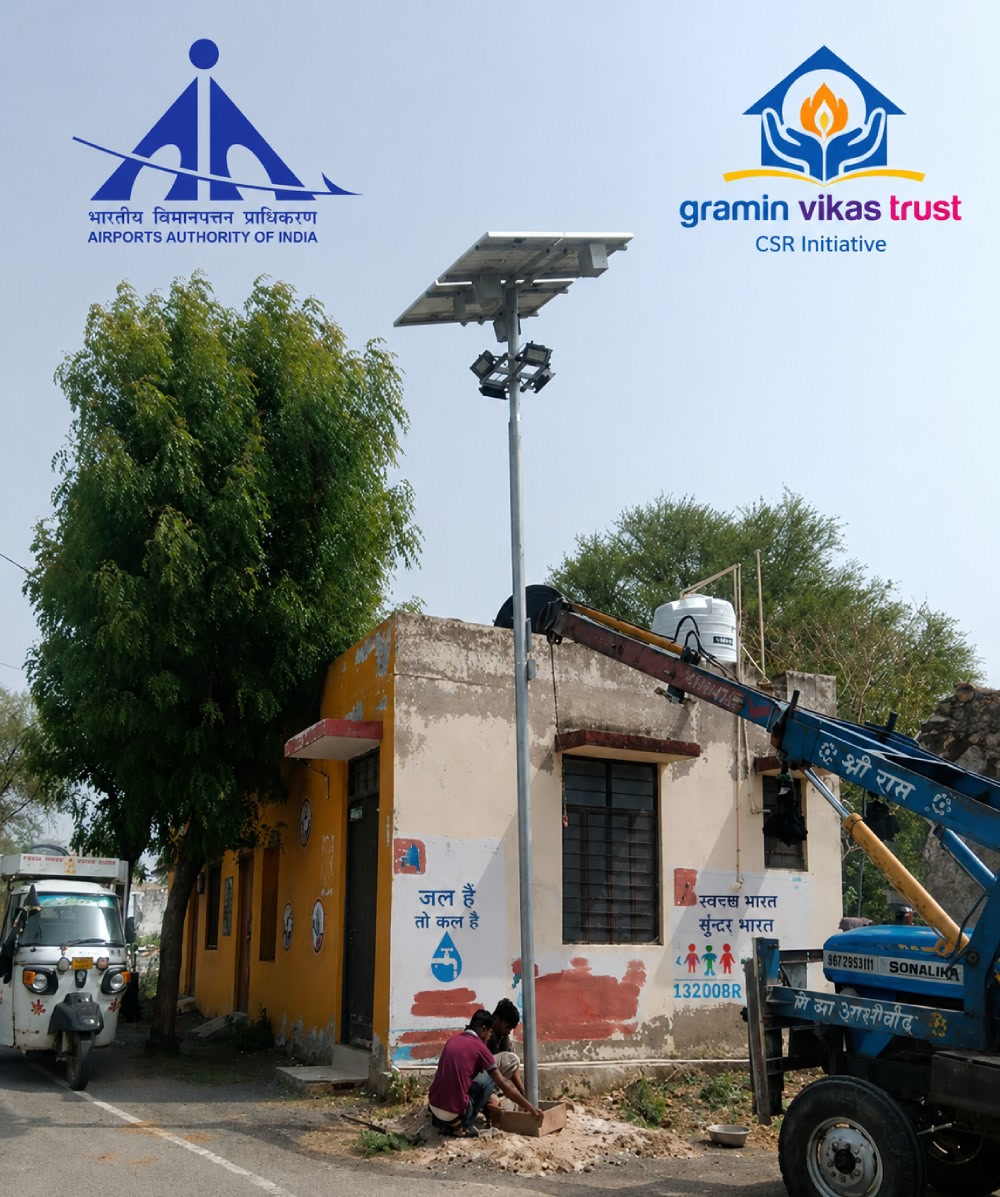
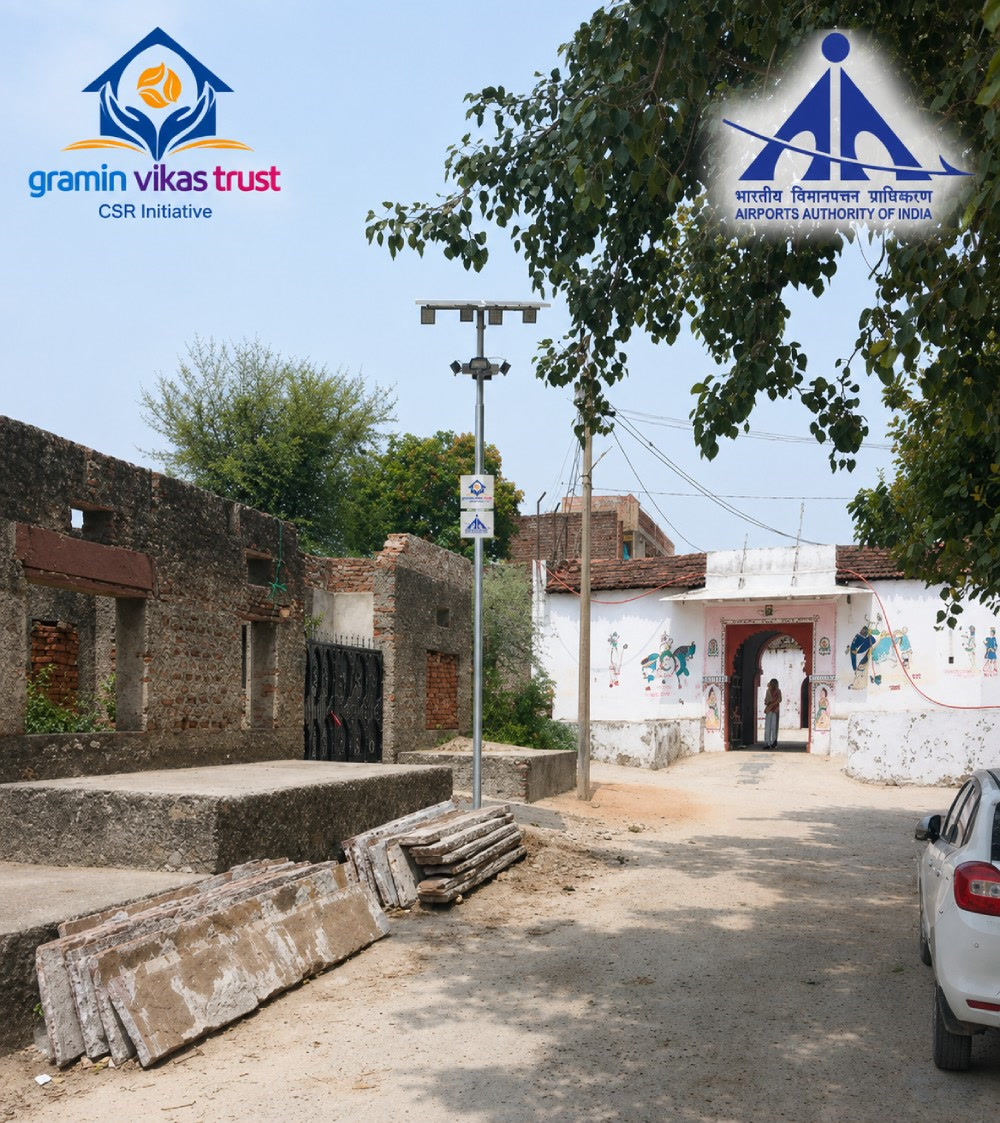
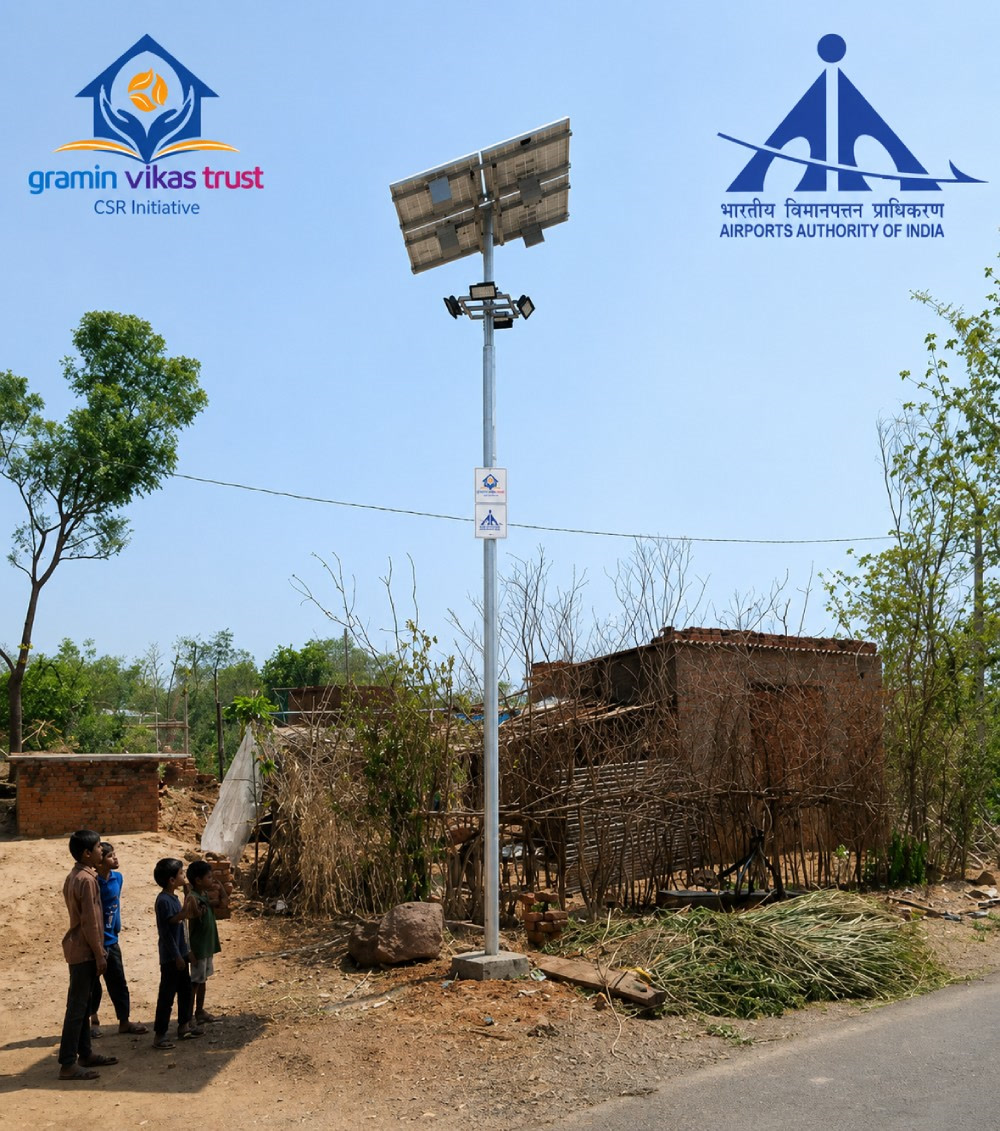
Solar-Powered High-Mast Lighting Systems in selected villages of Dungarpur
District, Rajasthan.
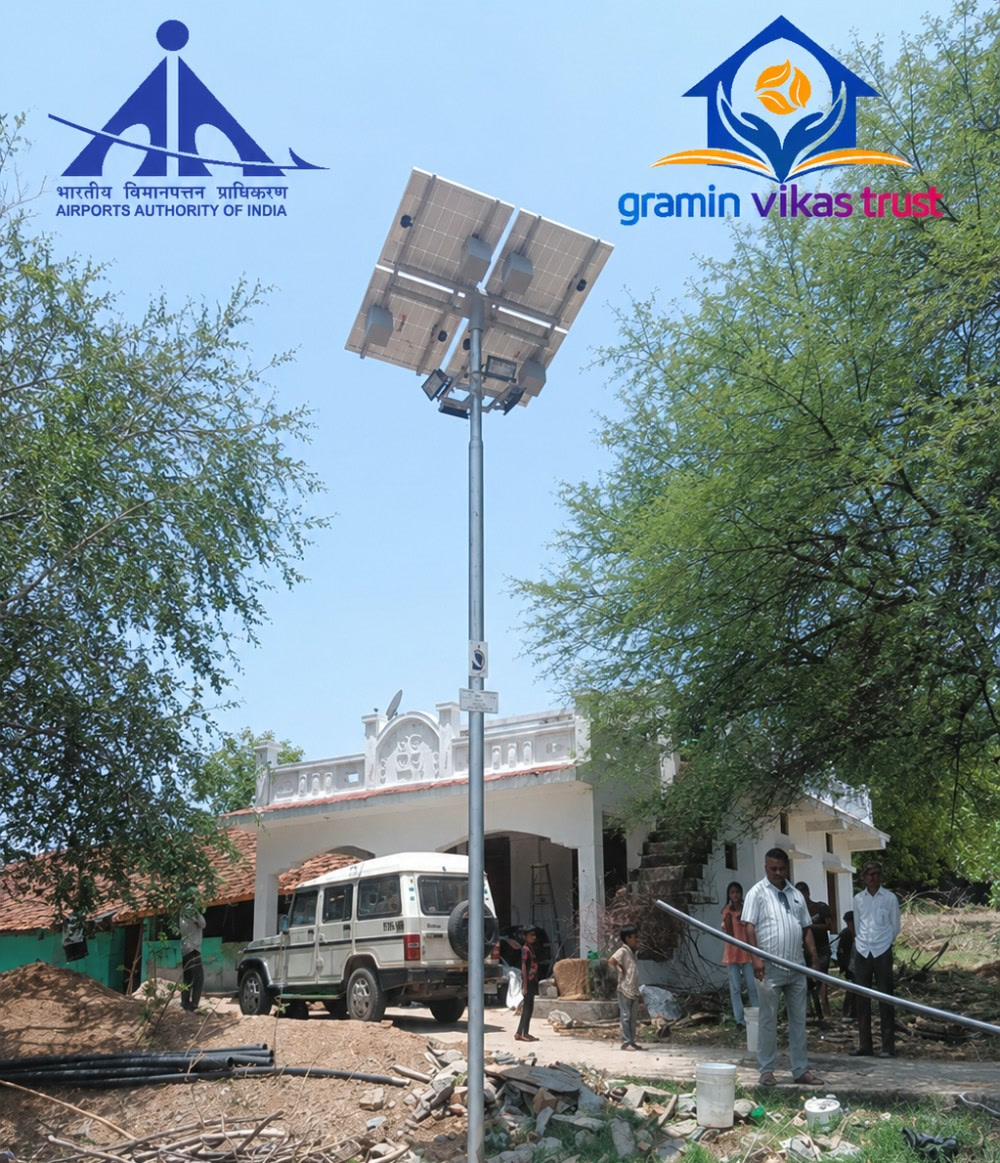
The project involved the Supply, Installation, Testing and Commissioning (SITC) of
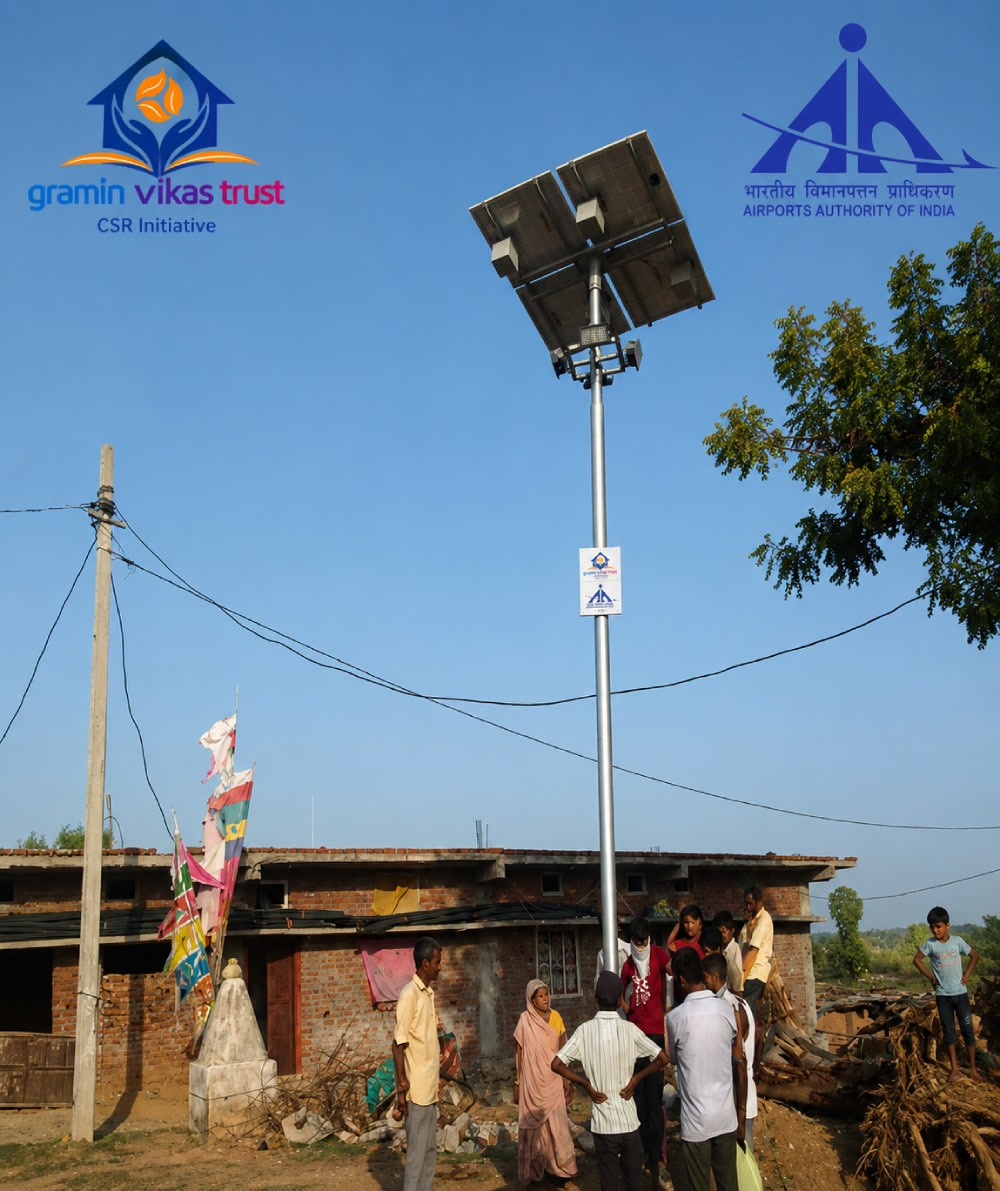
twenty-one (21) Solar High-Mast Lighting Systems at strategically identified public
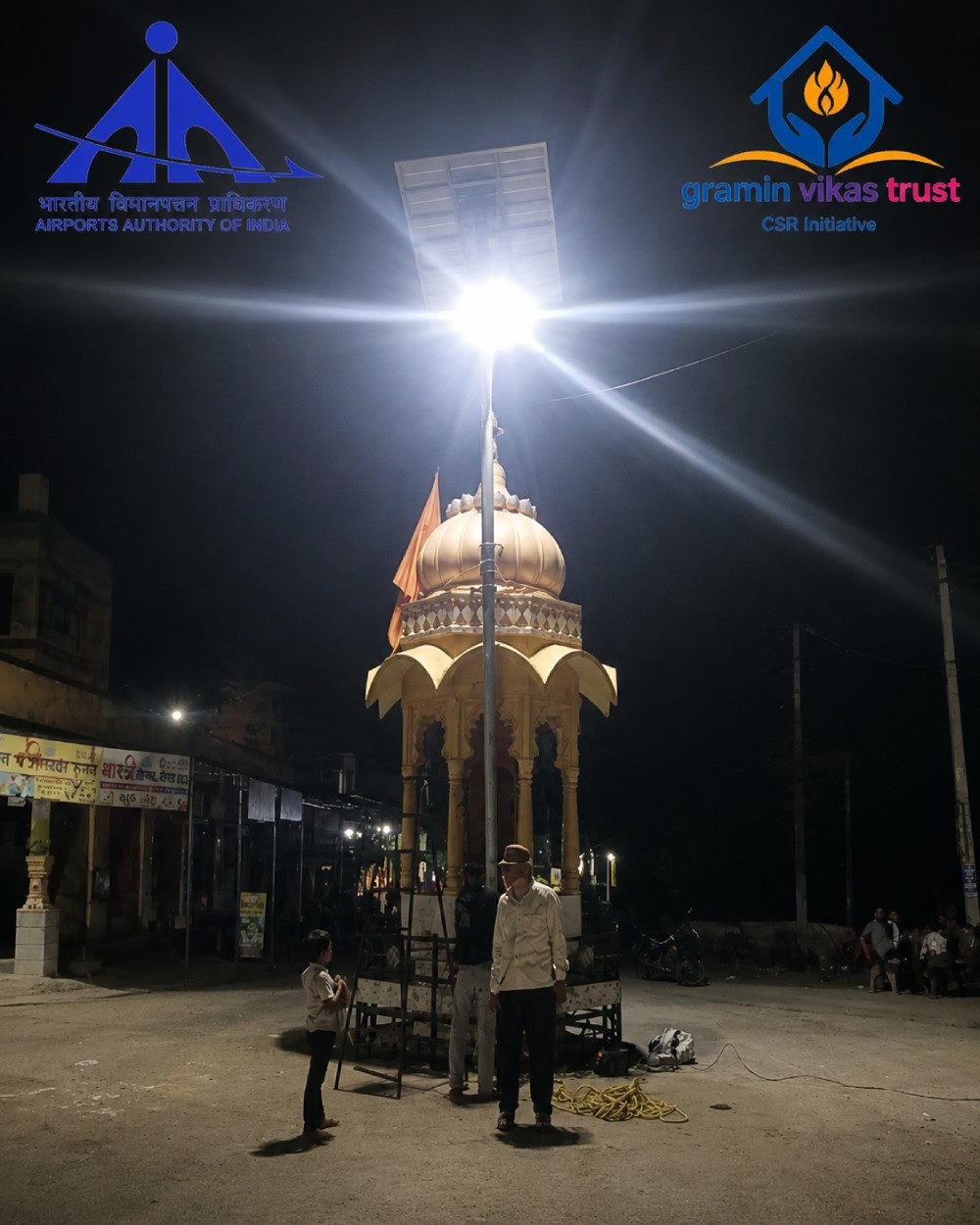
locations including village squares, road junctions, community gathering places,
health centers, bus stands, temple premises, and tribal habitations.
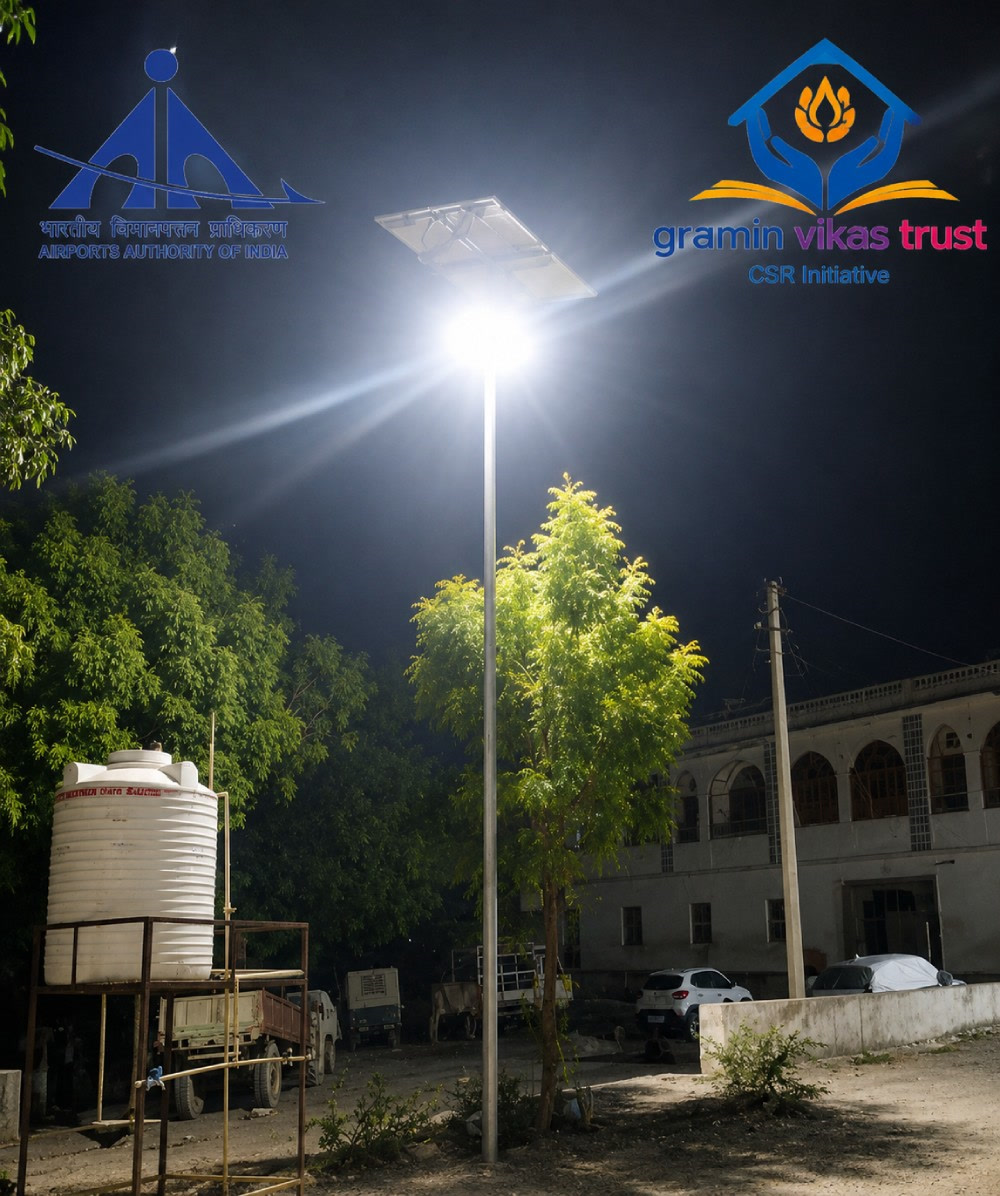
The installed systems provide sustainable and uninterrupted illumination through
renewable solar energy, reducing dependence on conventional electricity and
ensuring environmental sustainability. The project has significantly improved night-
time visibility, safety, and accessibility for villagers.
The successful completion of the project reflects the commitment of AAI towards
inclusive rural development and sustainable infrastructure creation.
The villages selected under the project are predominantly rural and tribal areas
where adequate public lighting infrastructure was either unavailable or insufficient.
Poor illumination during night hours often resulted in:
Community consultations and local stakeholder interactions revealed an urgent need
for durable and environmentally sustainable lighting solutions. Solar-powered high-
mast systems emerged as an ideal solution due to their energy independence, low
operational costs, and suitability for remote rural locations.
Accordingly, Airports Authority of India approved the project under its CSR
programme to address these challenges and improve the quality of life in the target
villages.
The key objectives of the project were:
The project was implemented through a systematic approach comprising site identification, community consultation, procurement, installation, testing, and commissioning.
Major implementation activities included:
A total of 21 Solar-Powered High-Mast Lighting Systems were installed under the project, covering 11 locations in Dungarpur District and 10 locations in Rajsamand District, thereby enhancing public lighting and improving safety and accessibility in the selected rural communities.
The project has generated significant social, environmental, and developmental benefits for the local communities.
The illuminated public spaces have enhanced visibility during night hours, reducing risks associated with accidents and unsafe movement.
Better lighting at public locations has increased community confidence and improved security conditions.
Community members can now participate in social, cultural, and religious activities during evening hours with greater convenience.
The project demonstrates the practical use of clean and renewable solar energy in rural infrastructure development.
Solar-powered systems contribute to environmental conservation by reducing dependence on conventional electricity sources.
Several installations were completed in tribal settlements, ensuring equitable access to infrastructure and development benefits.
The local communities, Gram Panchayats, village leaders, and beneficiaries have
expressed appreciation for the project. Villagers reported improved mobility after
sunset, increased safety around public places, and better utilization of common
spaces.
The project has strengthened community confidence in sustainable development
initiatives and highlighted the positive impact of CSR-supported infrastructure
projects.
To ensure long-term sustainability:
Regular inspection and preventive maintenance will ensure continued operation and
long service life of the assets.
The project “Supply, Installation, Testing & Commissioning (SITC) of Solar-Powered
High-Mast Lighting Systems Across Multiple Locations in Dungarpur District,
Rajasthan” has been successfully completed under the CSR initiative of Airports
Authority of India.
Through the installation of 21 Solar High-Mast Lighting Systems, the project has
improved public safety, enhanced accessibility, promoted renewable energy, and
strengthened rural infrastructure across the beneficiary villages.
Gramin Vikas Trust expresses its sincere gratitude to Airports Authority of India for
its valuable support and commitment towards sustainable community development.
The project stands as a significant contribution toward improving the quality of life of
rural and tribal communities in Rajasthan.
Gramin Vikas Trust is a non-government organization established in 2003, registered under the Society Registration Act 1860 and the Public Charitable Trust Act 1950. Founded by a dedicated team of trustees from diverse professional backgrounds, including business, education, and public service, the Trust is united by a common goal: to educate and empower rural communities.

Gramin Vikas Trust, Veer Annex,
1st Floor B/h Circuit House, Abu Highway,
Palanpur : 385001 Dist- Banaskantha,
Gujarat(India)